Eating well and staying active with diabetes: a simple guide

Food and movement are powerful tools to manage blood sugar. Learn the plate method, smart food choices, how much activity to aim for each week, and how to exercise safely.
Food and movement are two of the most powerful tools you have to manage blood sugar, and you use them every day. No special diet, no gym membership needed: here are simple, science-based habits to start with.
Why food and activity matter
Carbohydrates in food raise your blood sugar. How fast depends on the food and on what you eat with it: carbs eaten with protein, fat or fiber raise blood sugar more slowly. Physical activity does the opposite: working muscles use glucose for energy and become more sensitive to insulin, which helps lower blood sugar.
The plate method: balance without counting
The American Diabetes Association's Diabetes Plate helps you build a balanced meal without weighing or counting anything. Start with a plate of about 23 cm (9 inches):
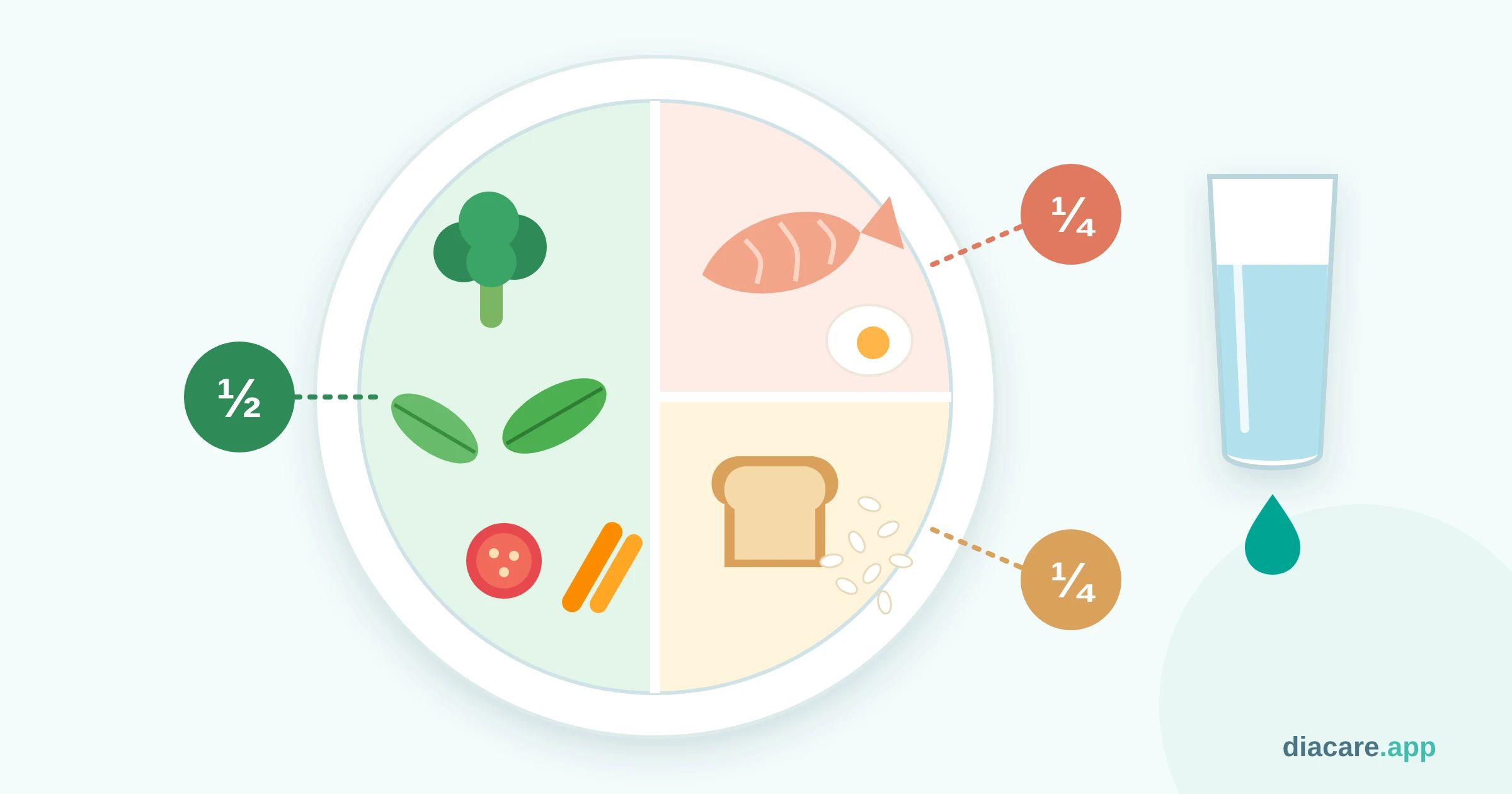
| Part of the plate | What to put there | Examples |
|---|---|---|
| ½ – Non-starchy vegetables | Low in carbs, rich in fiber and vitamins | Salad, broccoli, green beans, tomatoes, peppers, zucchini, spinach |
| ¼ – Protein | Lean or plant-based | Fish, chicken, eggs, beans, lentils, tofu |
| ¼ – Quality carbs | Preferably whole grains and high-fiber foods | Whole-grain bread, brown rice, bulgur, potatoes, sweet potatoes, fruit |
| Drink | No added sugar | Water, unsweetened tea or coffee |
Smart choices for steadier blood sugar
- Choose whole foods over highly processed ones as much as possible.
- Prefer whole fruit to juice: juice raises blood sugar faster than the whole fruit.
- Cut back on sugary drinks (sodas, sweetened juices, energy drinks): they are among the fastest ways to raise blood sugar.
- Prefer whole grains to refined ones (white bread, white rice, regular pasta).
- Eat regular meals with roughly the same amount of carbs at each meal, to avoid both highs and lows.
Moving more: how much and how?
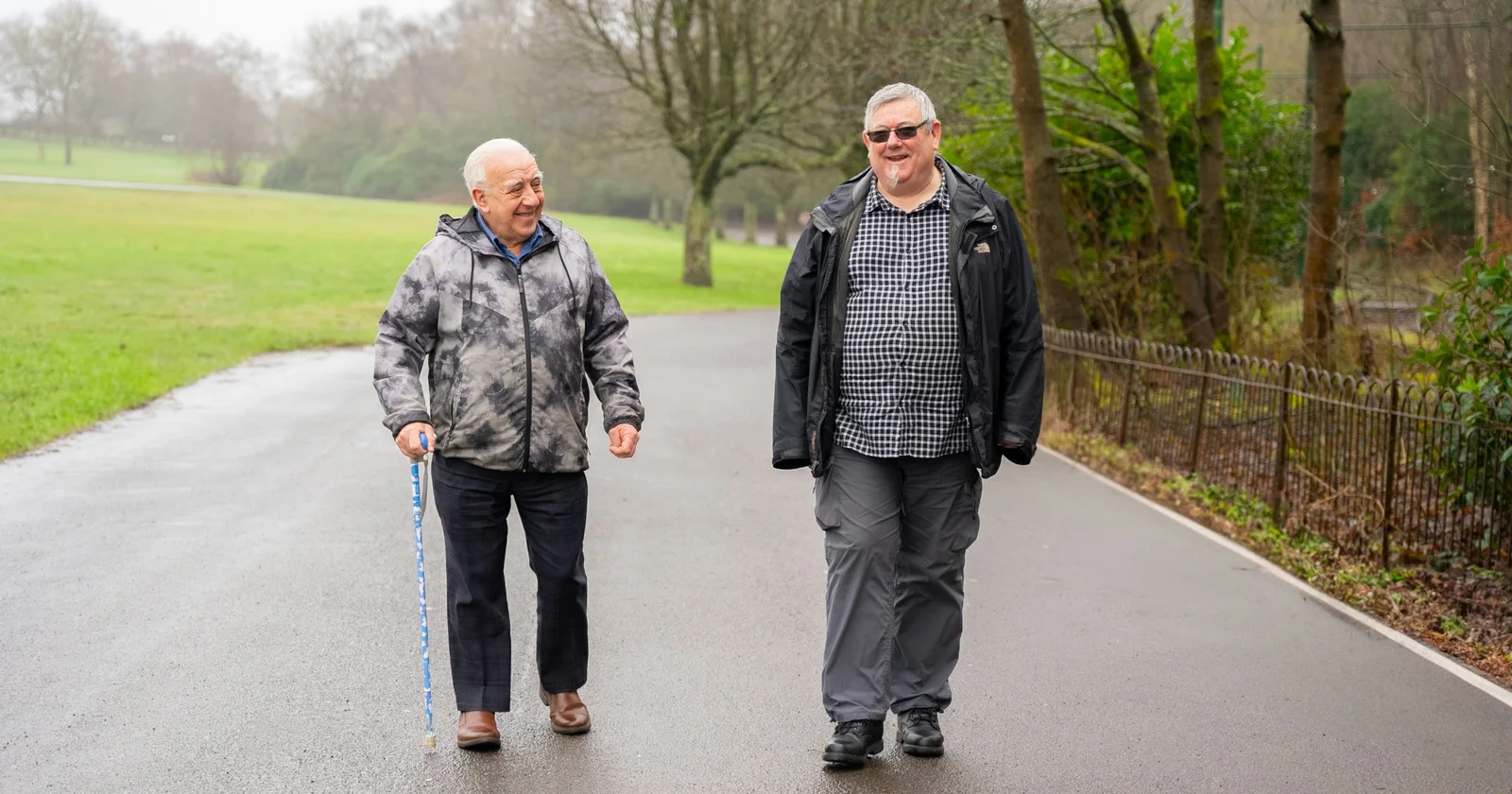
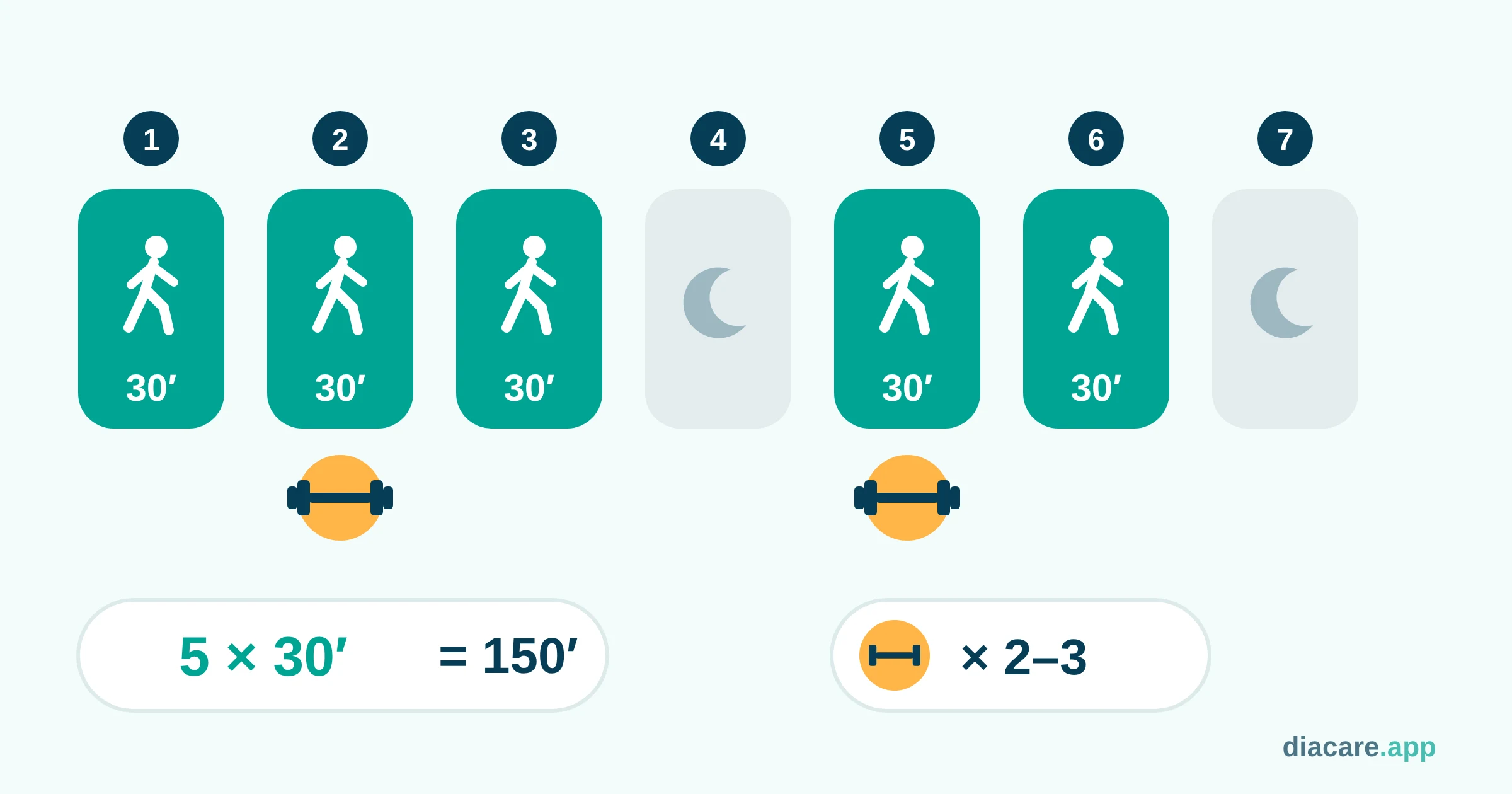
According to the American Diabetes Association Standards of Care, most adults with diabetes should aim for:
| Type of activity | How much | Examples |
|---|---|---|
| Aerobic (cardio) | At least 150 minutes per week, over at least 3 days, never more than 2 days in a row without activity | Brisk walking, cycling, swimming, dancing |
| Strength (resistance) | 2 to 3 sessions per week, on non-consecutive days | Body-weight exercises, resistance bands, weights |
| Flexibility and balance (older adults) | 2 to 3 times per week | Yoga, tai chi, stretching |
| Breaking up sitting time | Every 30 minutes | A few minutes of walking, standing up, moving your arms and legs |
Exercising safely

- If you take insulin or medicines that can cause lows, check your blood sugar 15 to 30 minutes before exercising, and during long sessions. Ask your doctor what range is safe for you before exercise.
- Always carry fast-acting sugar (glucose tablets, a small juice) in case of a low. If you feel shaky, sweaty or dizzy, stop and check your blood sugar.
- If your blood sugar is very high and you have type 1 diabetes, check for ketones first. Do not exercise if your ketones are moderate or high: it can make things worse.
- Drink water before, during and after activity, and wear comfortable shoes. Check your feet after exercise.
- Blood sugar can keep dropping for several hours after exercise: check again afterwards if your doctor has told you to.
Track it with DiaCare
Log your meals in the nutrition page to see your carbs and calories for the day, and record your walks, runs or workouts in the activity page, which estimates the calories burned. Comparing them with your blood sugar readings helps you see how your meals and activity affect you.
Sources
- CDC – Diabetes Meal Planning
- American Diabetes Association – Plan Your Plate (PDF)
- American Diabetes Association – Standards of Care in Diabetes 2026
- ADA – Physical Activity/Exercise and Diabetes: A Position Statement (Diabetes Care, 2016)
- NIDDK – Managing Diabetes
- MedlinePlus – Diabetes type 2: meal planning
- Mayo Clinic – Diabetes and exercise: when to monitor your blood sugar
⚠️ This article is for education only and does not replace medical advice.